What South African road sign colours and shapes mean
South African road signs are sorted by shape first and colour second. The shape tells you the kind of sign (mostly circles for rules, triangles for warnings and rectangles for guidance), and the colour tells you which group inside that kind.
Control signs: stop, yield, no entry and more
Red and white, and most have a shape all their own. They decide who has right of way.
The stop sign has eight sides, and the yield sign is a triangle with its point at the bottom.
At a stop sign you must stop at the stop line, or level with the sign if there is no line, and only go on when it is safe.
At a yield sign you must give way to traffic on the road you are joining when it is close enough to be a danger.
The no entry sign means no vehicle may go into that road.
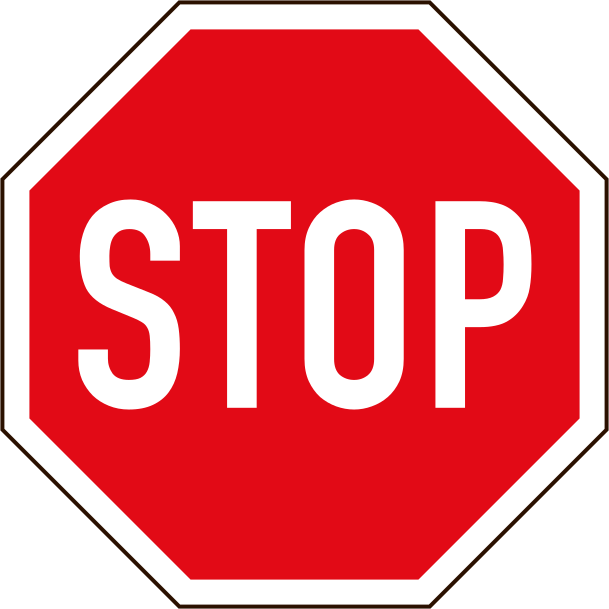 Stop
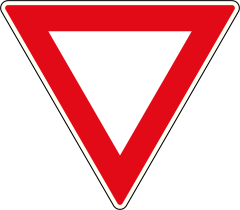 Yield
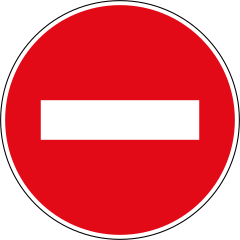 No entry
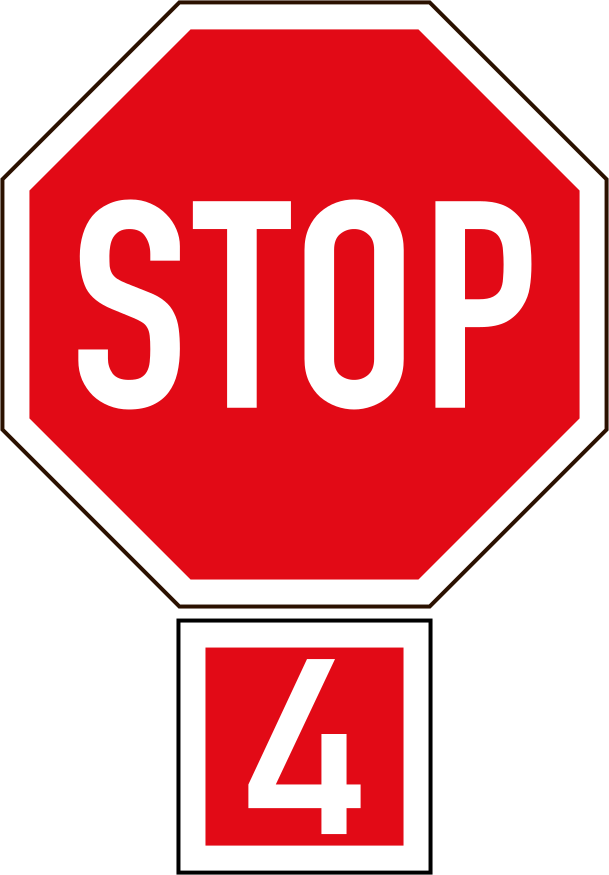 4-way stop
Sources
Practise them in K67 under “Regulatory: stop, yield and priority”. Try it free or get the app.
Command signs
Blue disc with a white symbol: you must do what it shows.
A blue circle is an order you must obey, such as keep left or proceed left only.
Some command signs apply to all traffic, and some only to the road user shown, such as buses only.
A number on a blue disc is a minimum speed: you must drive at least that fast.
At roadworks the same sign is shown in black on yellow.
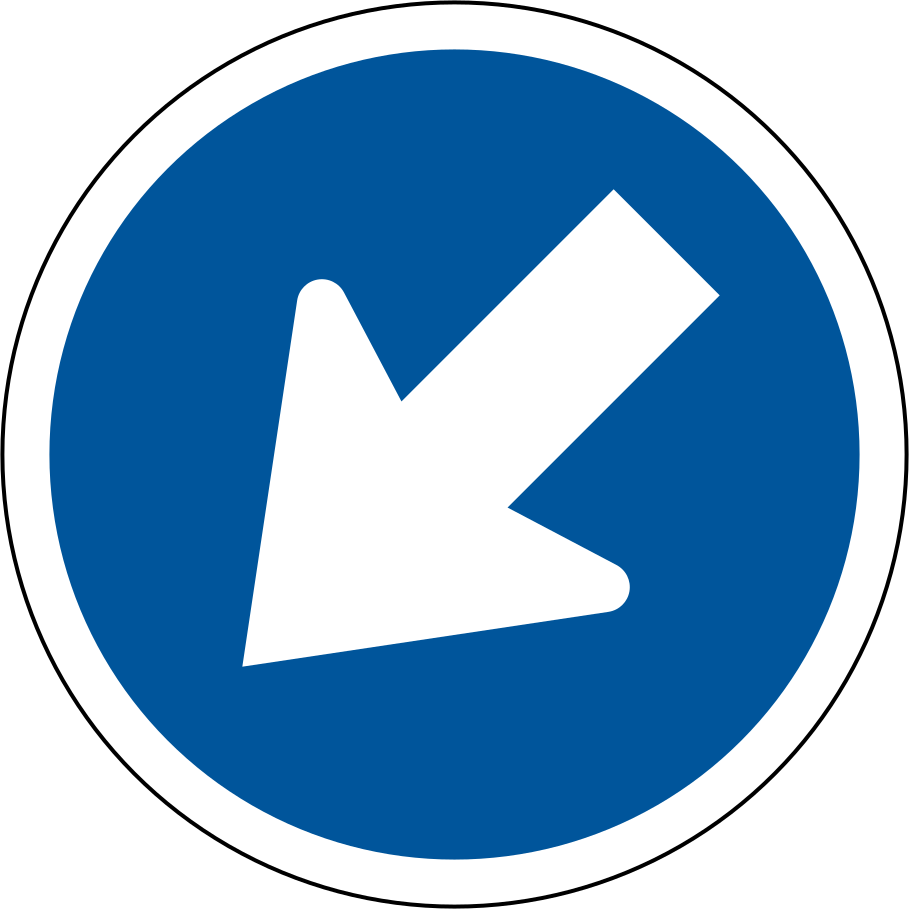 Keep left
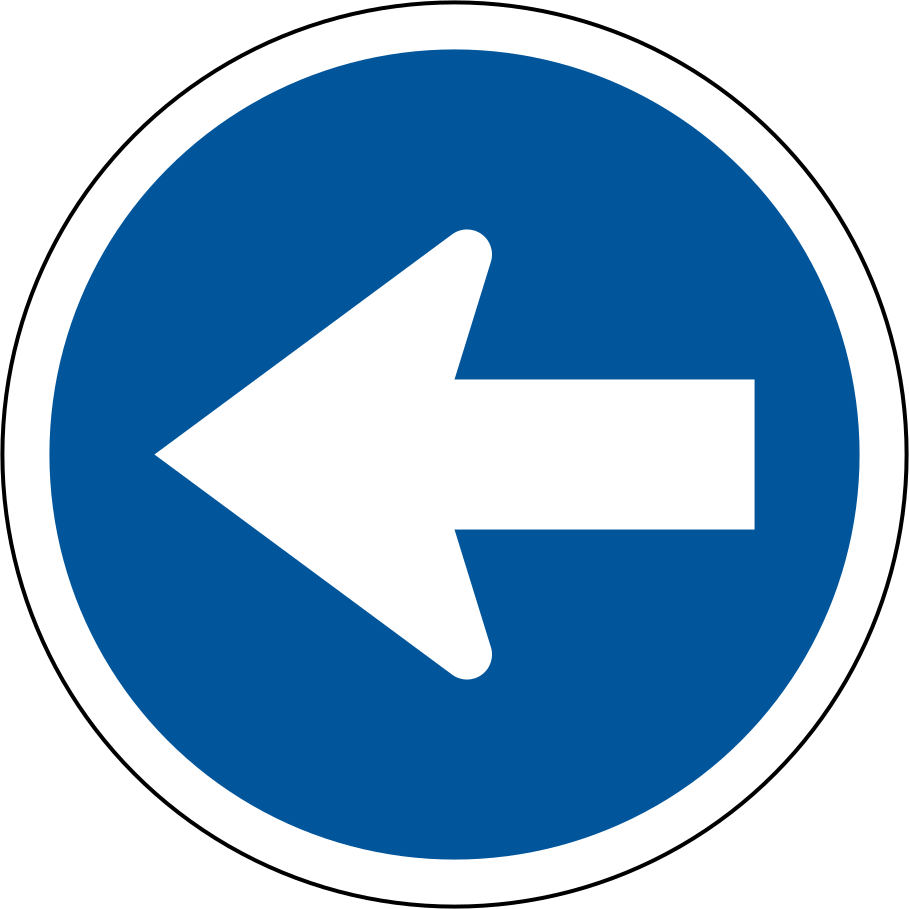 Proceed left only
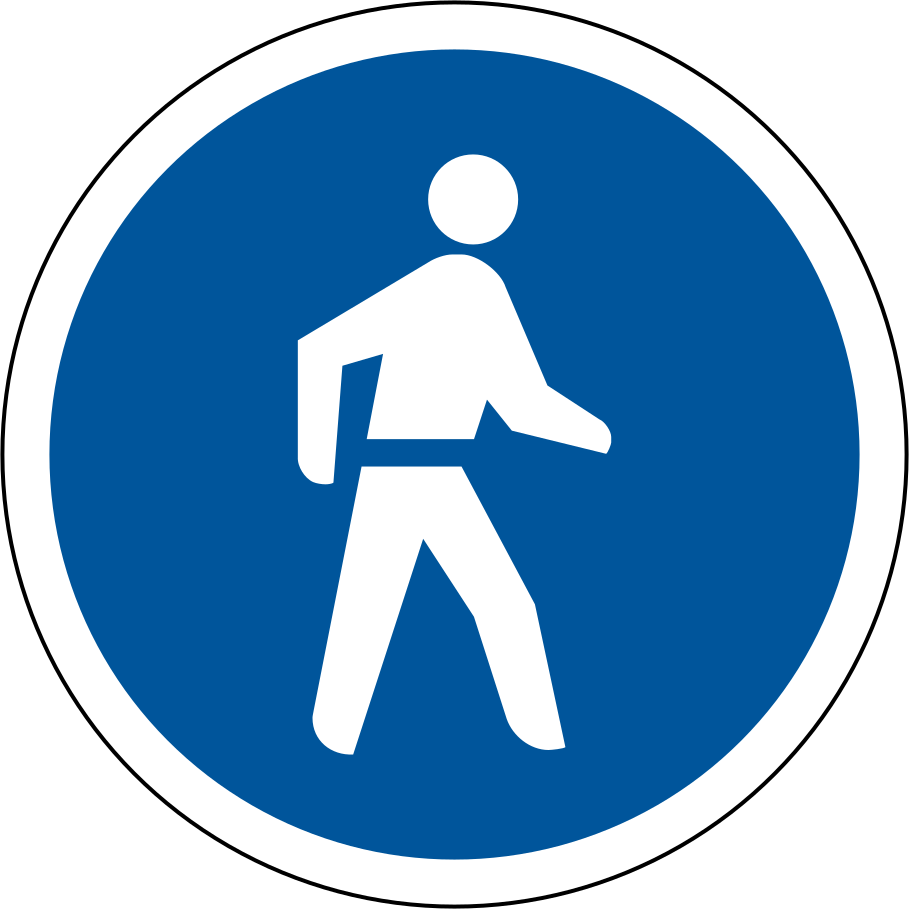 Pedestrians only
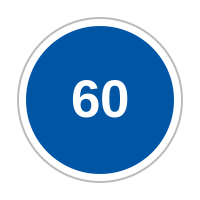 Minimum speed 60
Sources
Practise them in K67 under “Regulatory: command and "only" signs”. Try it free or get the app.
Prohibition signs
Red ring on white: you may not do what the symbol shows, or go over the limit.
A red ring with a black symbol on a white background means something is not allowed.
When the sign bans an action or a type of vehicle, a red diagonal line crosses the symbol.
A number in a red ring is a limit and has no red line, such as a speed limit you may not go over.
A no overtaking sign applies for 500 m past the sign.
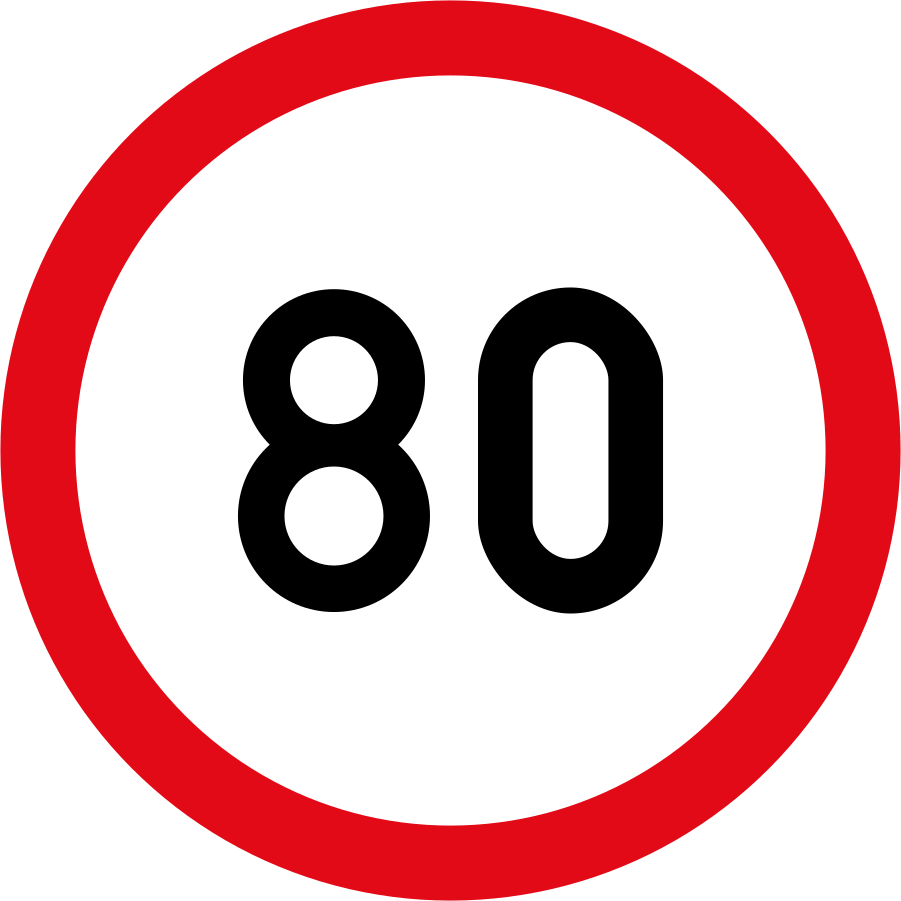 Speed limit 80
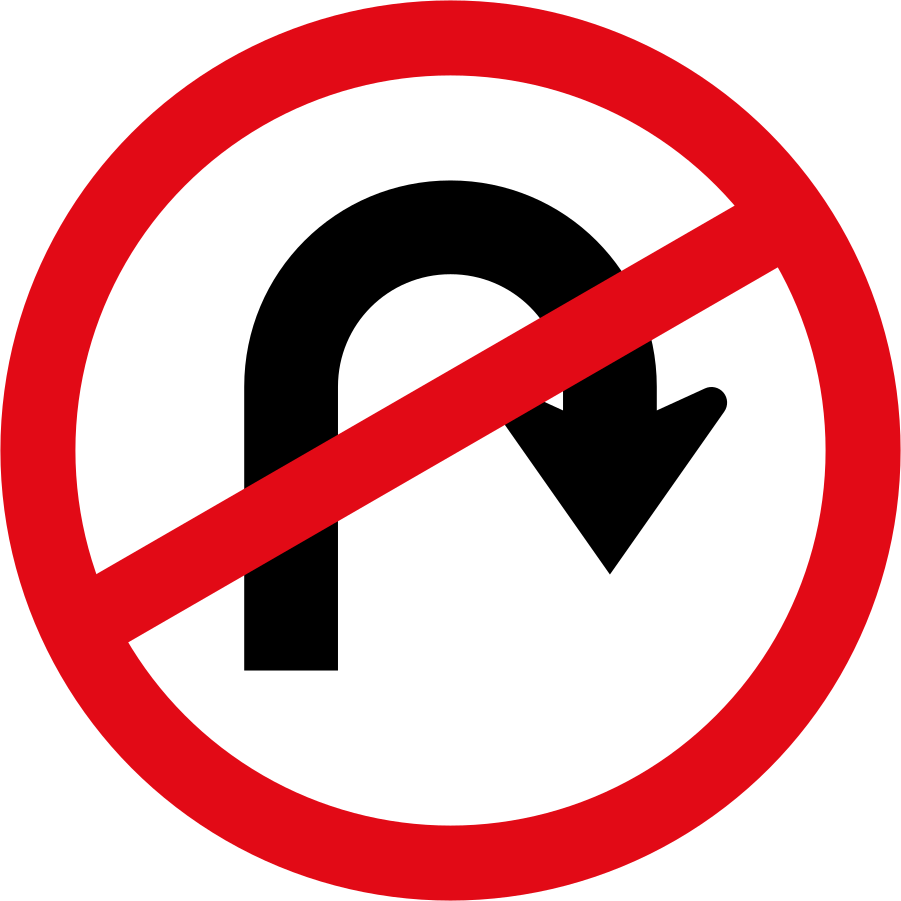 No U-turn
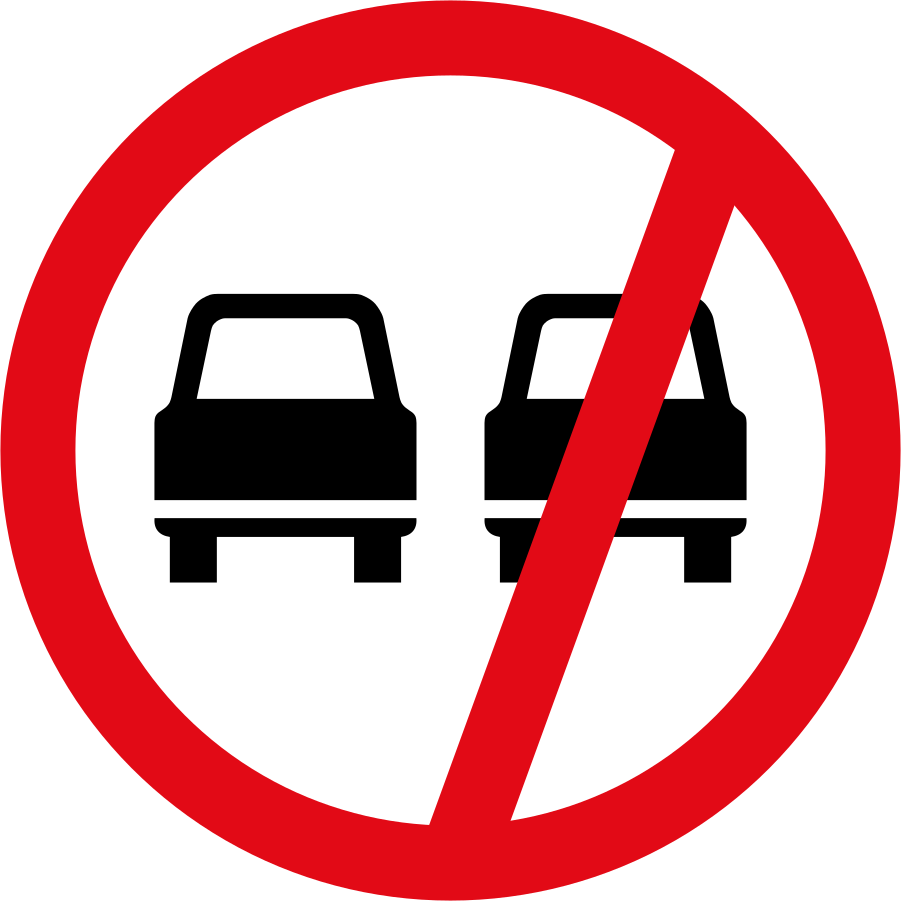 No overtaking
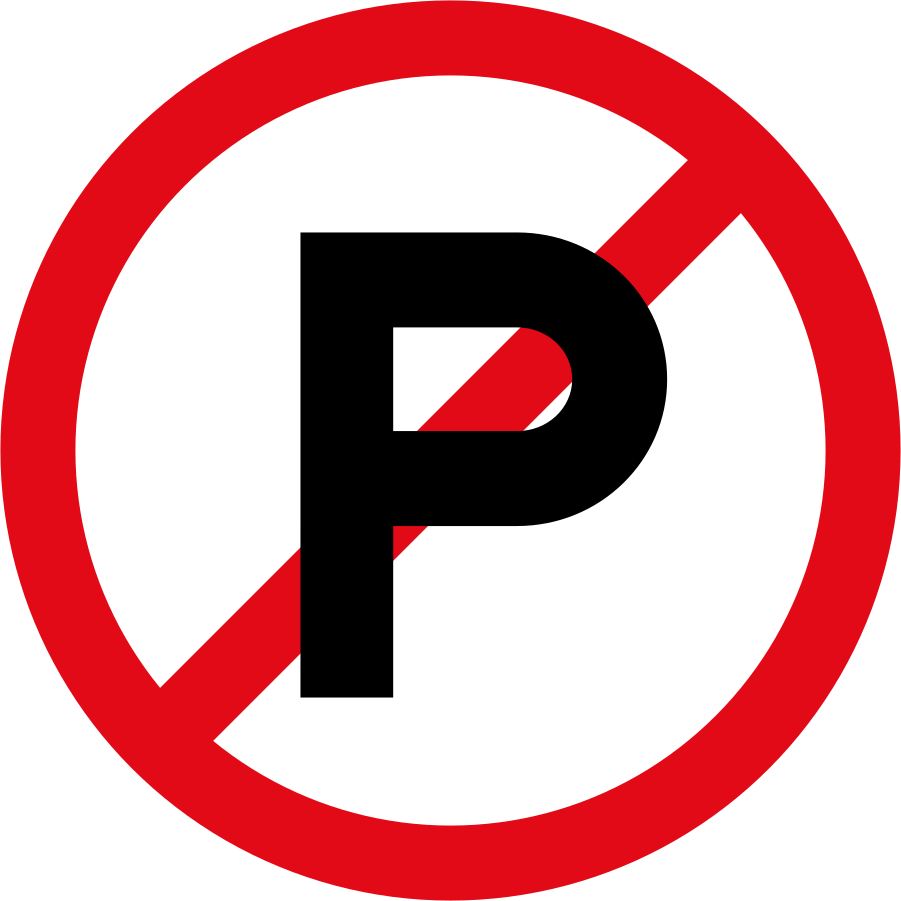 No parking
Sources
Practise them in K67 under “Regulatory: prohibitions and limits”. Try it free or get the app.
Reservation signs
Blue rectangle with a white symbol: this lane or space is kept for the vehicle shown.
A blue rectangle with a white border marks a road, lane or parking area kept for one kind of road user.
Signs with an R are for moving vehicles, and signs with a P are for parking.
If you are not driving the vehicle shown, you may not use the reserved space.
The vehicle shown does not have to use it: a bus reservation sign keeps other traffic out but does not force buses in.
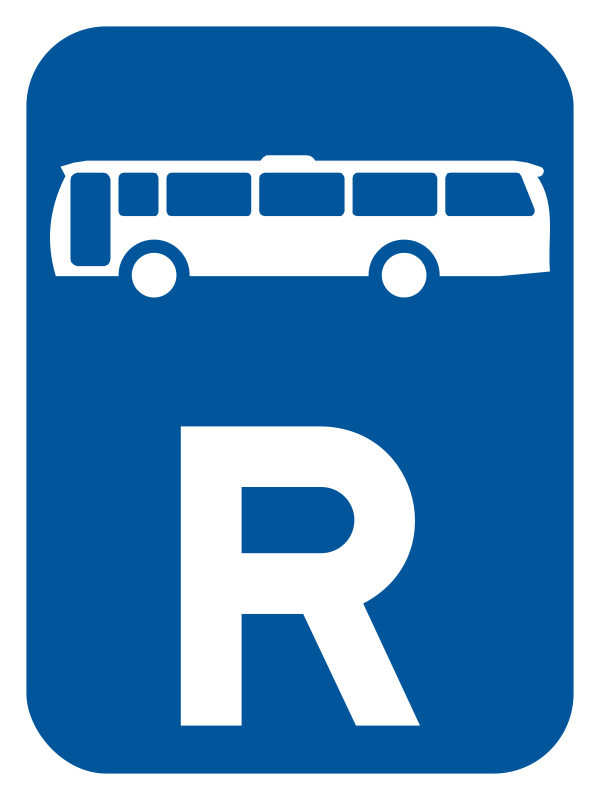 Bus reservation
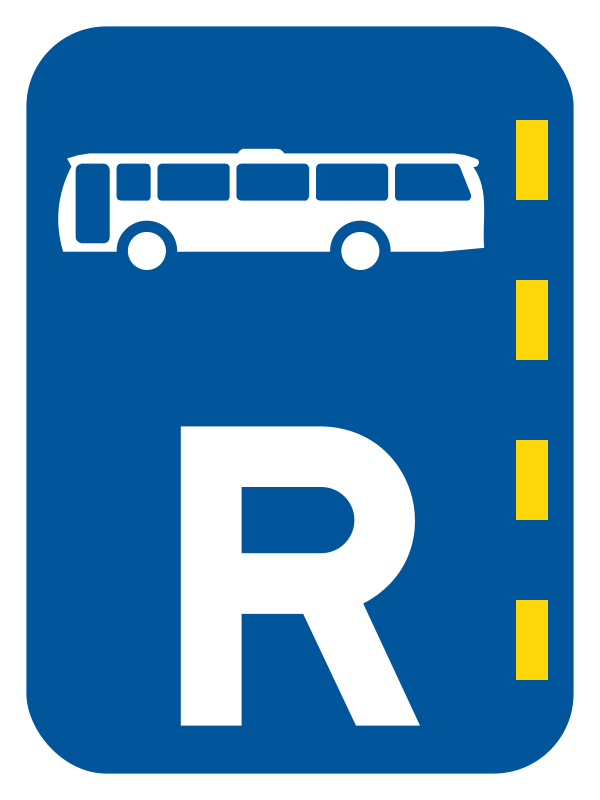 Bus lane
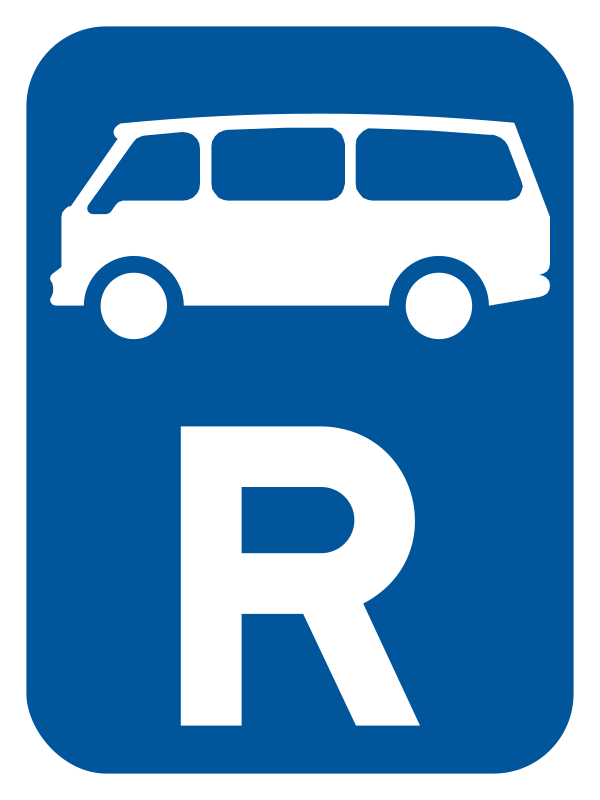 Minibus reservation
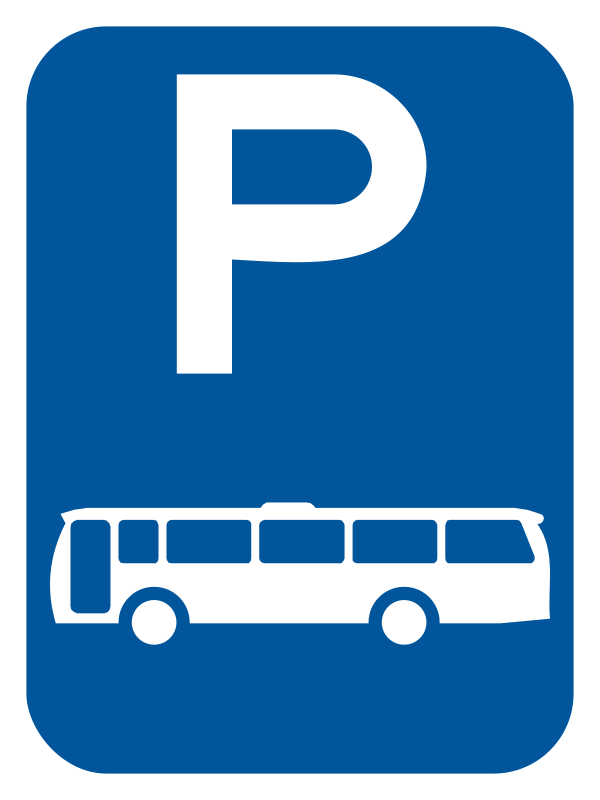 Bus parking
Sources
Practise them in K67 under “Regulatory: reservations (buses, taxis, parking)”. Try it free or get the app.
Warning signs
Red triangle, point up: danger ahead. Be ready to slow down or change course.
Warning signs are triangles with the point at the top, a red border and a black symbol on white.
They tell you about a danger or possible danger ahead, and you may need to slow down or change what you are doing.
At roadworks the background turns yellow, but the red border stays.
Most hazard markers are rectangles placed at the hazard itself, not before it.
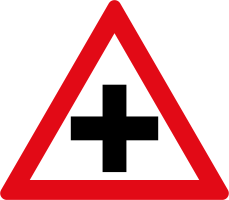 Crossroad ahead
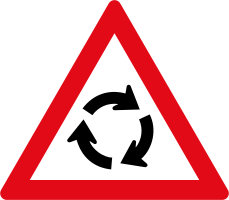 Traffic circle ahead
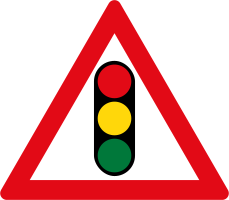 Traffic signals ahead
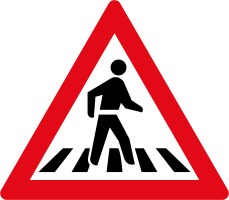 Pedestrian crossing ahead
Sources
Practise them in K67 under “Warning: road layout”. Try it free or get the app.
Guidance and direction signs
Show the way: blue for top freeways, green for other routes, brown for tourism.
Guidance signs show places, directions and distances, and most of them are rectangles.
Blue direction signs are used on the highest level of road, such as major freeways, and green ones on other routes.
Brown signs lead to tourist places and services, and white signs with dark letters show local places and street names.
Route numbers on direction signs are yellow, and temporary direction signs at roadworks are black on yellow.
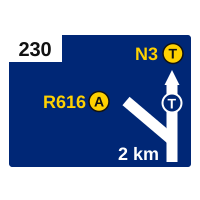 Freeway exit direction (blue)
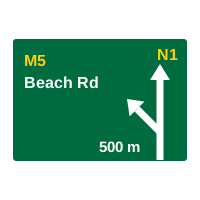 Advance direction (green)
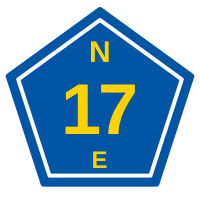 National route marker
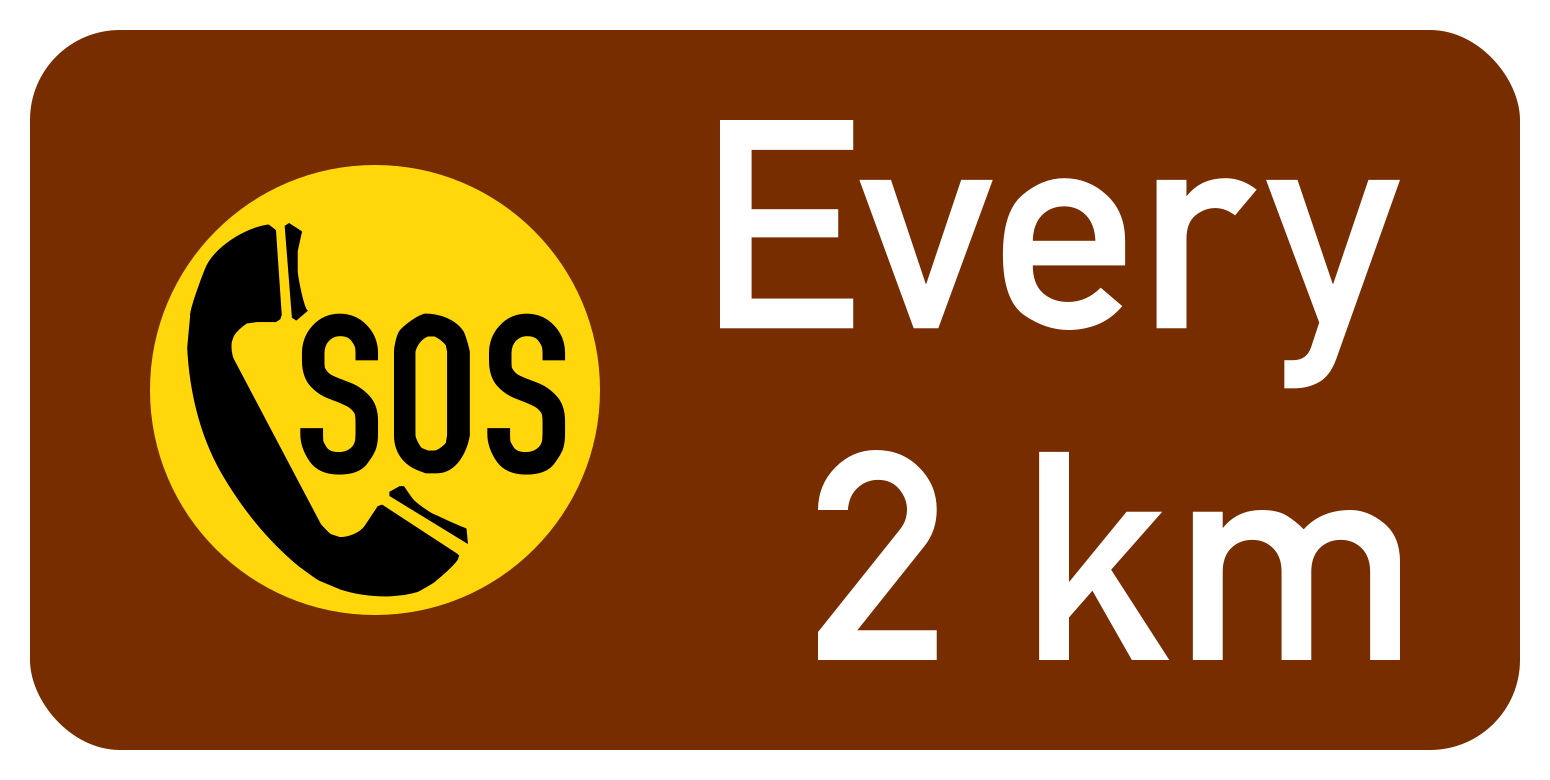 SOS phones every 2 km (brown)
Sources
Practise them in K67 under “Guidance: routes and directions”. Try it free or get the app.
Information signs
Green rectangle with white text or symbols: general facts, not directions.
Information signs tell you general facts, like a bus stop ahead or a cul-de-sac, and do not point the way.
Most are green with white text or symbols, and they are never round or triangular.
Small plates under another sign, such as a distance plate, add detail to that sign and are never used on their own.
The diamond-shaped right of way sign is one of the few information signs that is not a rectangle.
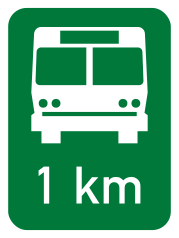 Bus stop ahead
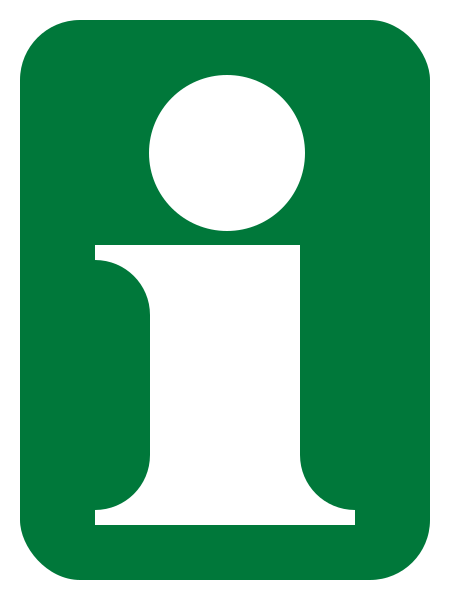 Information centre
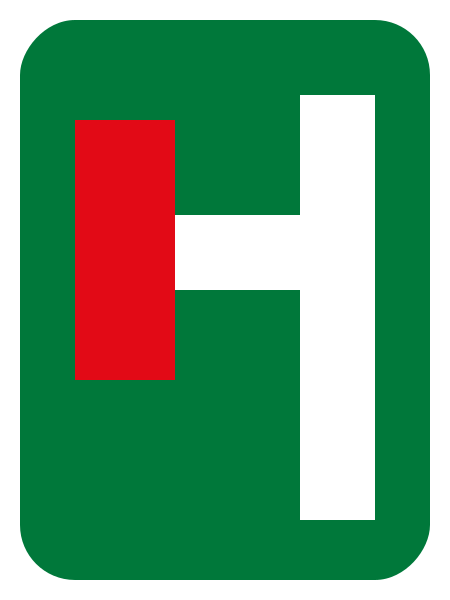 Cul-de-sac
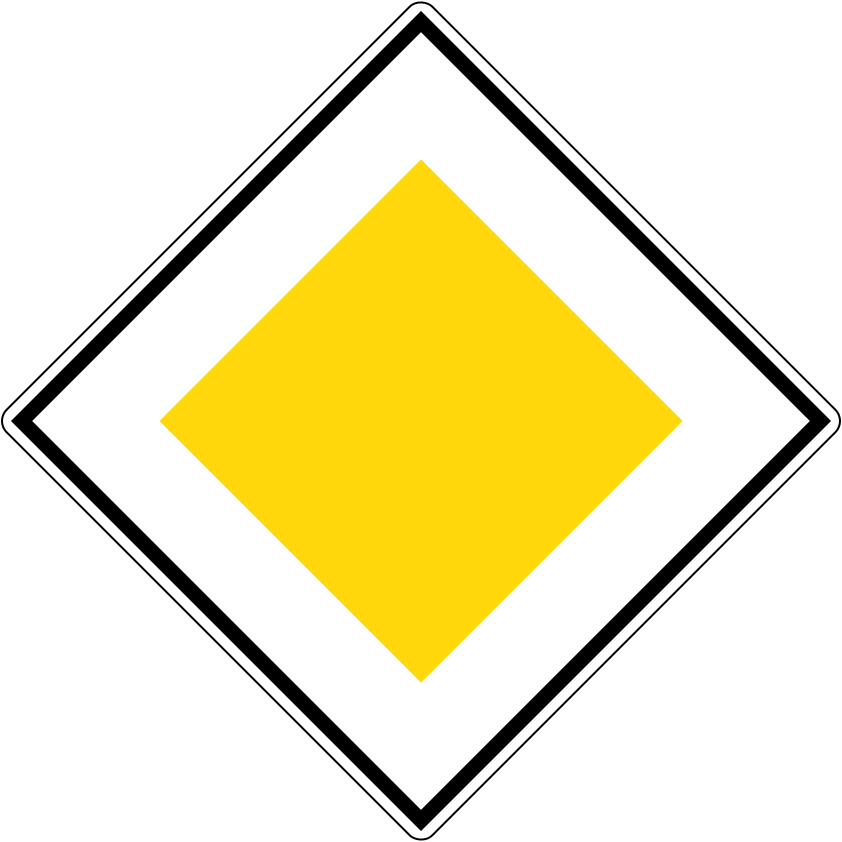 Right of way
Sources
Practise them in K67 under “Information signs”. Try it free or get the app.
Temporary signs
Yellow background: roadworks or a short-term change. Beats a clashing permanent sign.
A yellow background means conditions are not normal, for example at roadworks, an accident scene or a scholar patrol.
The sign keeps its shape and meaning: a white or blue background turns yellow and white symbols turn black, while red borders usually stay red.
If a temporary sign and a permanent sign disagree, obey the temporary sign.
Control signs, such as stop, yield and no entry, never turn yellow: they keep their normal colours even when used for a short time.
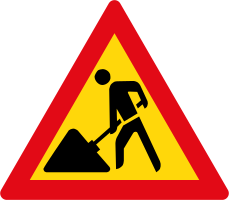 Roadworks ahead
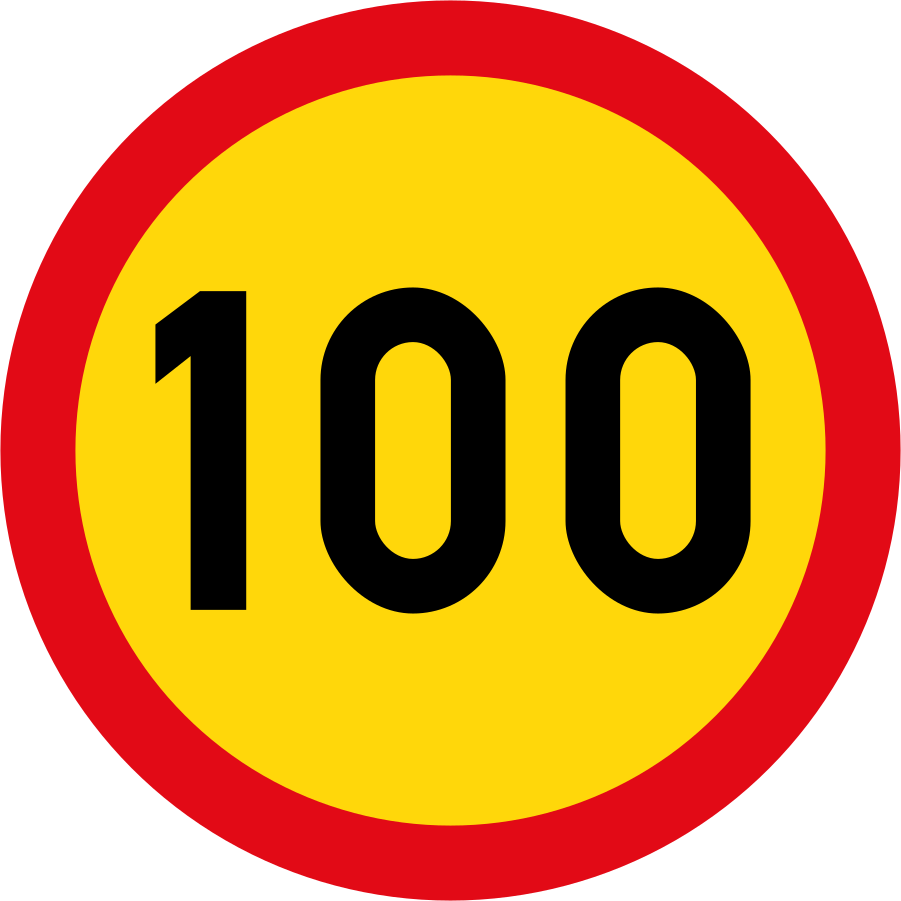 Temporary speed limit 100
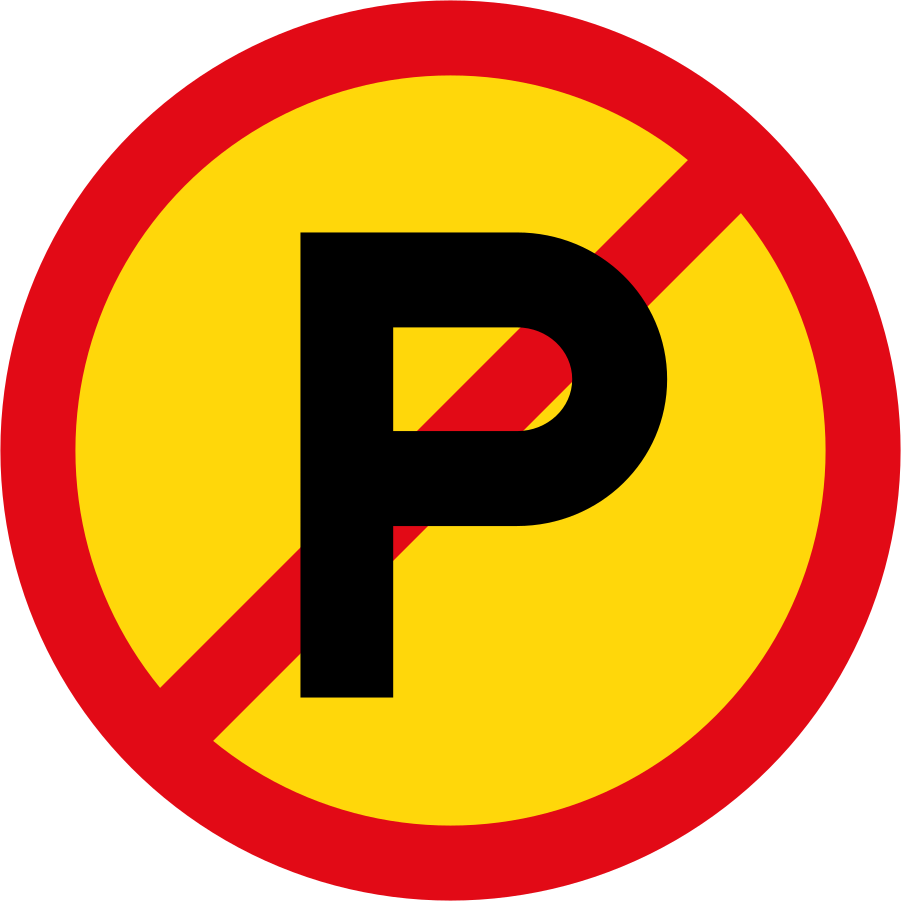 Temporary no parking
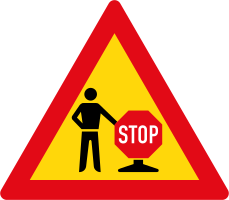 Stop-go control ahead
Sources
- National Road Traffic Regulations, 2000, reg 285(3), reg 286A(1)(b), reg 287(2), reg 287(5)(a)
- SADC Road Traffic Signs Manual Vol 1, Ch 1, Sections 1.3.1 and 1.4.4
- SADC Road Traffic Signs Manual Vol 1, Ch 2, Sections 2.1.2 and 2.2.1
- SADC Road Traffic Signs Manual Vol 1, Ch 3, Section 3.4.29 (Roadworks)
Practise them in K67 under “Warning: symbols and temporary warnings”. Try it free or get the app.
Road markings: white and yellow lines
Yellow lines are always rules. White lines can be rules, warnings or guides.
Road markings are grouped like signs: regulatory, warning and guidance.
Yellow is only used for regulatory markings, such as the solid yellow line along the left edge of the road.
A solid white centre line means no overtaking: do not cross it or drive to the right of it.
On a two-way road, the broken white line between the two directions warns that traffic on the other side comes towards you, so only cross it when it is safe.
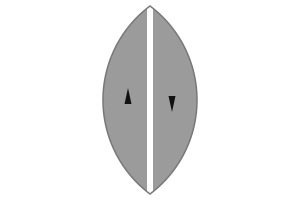 No overtaking line
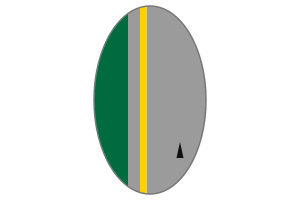 Left edge line (yellow)
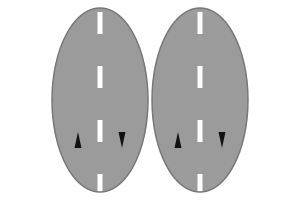 Dividing line
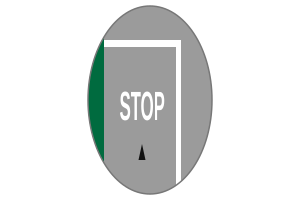 Stop line
Sources
Practise them in K67 under “Road markings: regulatory”. Try it free or get the app.
Traffic signals
Red on top, yellow in the middle, green at the bottom. Red means stop.
A steady red light means stop behind the stop line and wait there until the light turns green and it is safe.
A steady yellow light also means stop, unless you are so close to the line that you cannot stop safely.
A green light means you may go straight or turn, but you must still give way to traffic and pedestrians already in the junction.
A flashing red light means you treat the junction like a 3-way or 4-way stop and give way to people crossing.
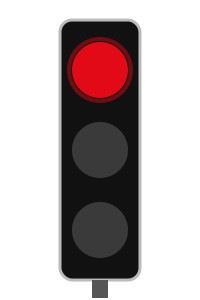 Red light
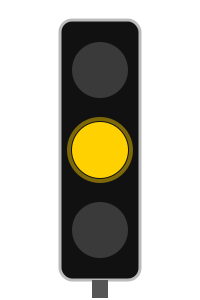 Yellow light
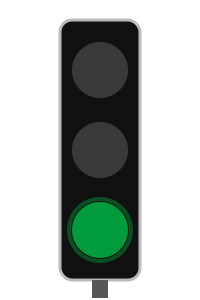 Green light
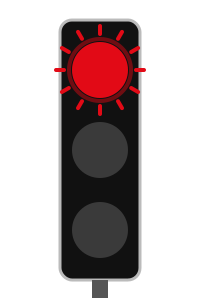 Flashing red light
Sources
Practise them in K67 under “Traffic signals and officers”. Try it free or get the app.
Practise these in K67
K67 pictures 600+ South African signs and markings across 753 sign questions, each with a short explanation. R99.99 once, no ads, works offline.